REVIEW · SAN JUAN
Old San Juan Immersive Walk: History and Culture
Book on Viator →Operated by KERC Experiences · Bookable on Viator
San Juan history walks right up to you. This 1.5-hour Old San Juan tour gives you a clear sense of how Puerto Rico’s colonial and military past shaped what you see on the street today. I like that it stays manageable and human-sized, and the pacing makes it easy to actually remember what you’re hearing.
My other big plus is the guide. With Kaleb leading the walk, you get a story that connects landmarks to culture and political status, and he welcomes questions instead of rushing past them. The one thing to consider: you’re mostly viewing major sites from the street, since Fortress and National Park areas are excluded.
In This Review
- Key Points at a Glance
- Old San Juan, Explained Like You’re Walking With a Smart Friend
- Why This Walk Works Better Than the Usual Bus Tour
- Meet at Plaza de Armas and Get Oriented Fast
- La Puerta de la Bandera: A Flag, a Message, and a City Identity
- Plaza de Armas: The Main Square Where Power Shows Up
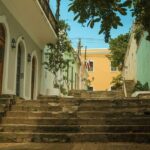
- Calle San Sebastián: Where You Learn the Street Rhythm
- Plaza del Quinto Centenario and the El Morro View
- Eugenio María de Hostos: Politics You Can Point To
- Calle del Cristo and the San Juan Cathedral Exterior
- Calle De La Fortaleza: Seeing La Fortaleza Without Entering Fort Areas
- Price and Value: What $75 Buys You Here
- Small Group, Big Momentum: When This Tour Really Shines
- Practical Expectations: Tickets, Timing, and Weather
- Should You Book This Old San Juan Walk?
- FAQ
- How long is the Old San Juan Immersive Walk?
- How many people are in the group?
- Where does the tour start?
- Where does the tour end?
- What is included in the price?
- What is not included?
- Do I need an admission ticket for the stops?
- Is confirmation sent after booking?
- What happens if the weather is bad?
Key Points at a Glance
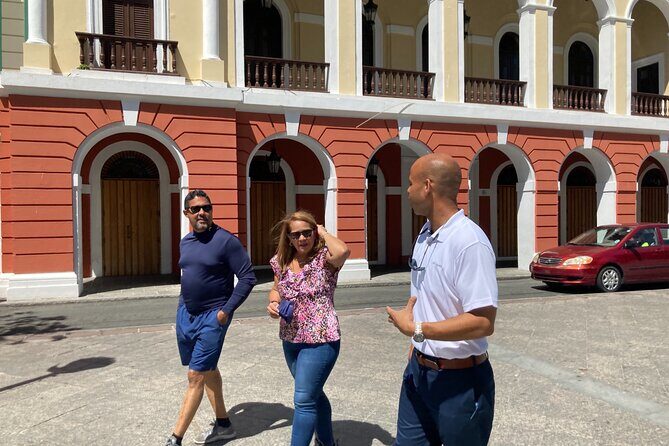
- Small-group size (max 10 travelers) keeps the walk from feeling like a cattle chute
- Guided context links Spanish-era rule, local identity, and Puerto Rico as a U.S. territory
- Stop-by-stop route covers iconic plazas and streets like Plaza de Armas and Calle del Cristo
- Views without extra entries since the route focuses on exterior views from public areas
- Weather matters because it’s a good-weather walking experience
Old San Juan, Explained Like You’re Walking With a Smart Friend
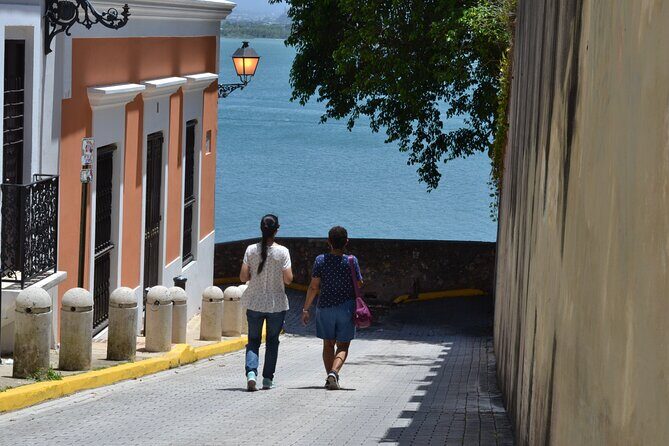
Old San Juan is the kind of place where you can wander for hours and still miss the thread. This tour gives you that thread fast. You start with the big symbols and power centers, then you move into the streets that people actually use, and by the end you’re looking at key exteriors that explain why this town was so strategically important.
I like that it doesn’t treat history as trivia. It treats it like cause-and-effect. You see a plaza, then you understand who used it, who controlled it, and how those choices echo in today’s customs and identity.
You can also read our reviews of more walking tours in San Juan

Why This Walk Works Better Than the Usual Bus Tour
A lot of tours in Old San Juan feel like a race: stop, photo, repeat. Here, the group stays small—10 travelers max—so questions don’t get swallowed. In practice, that means you can ask, why is this building here, or how did this political shift affect daily life.
The route also lasts about 1 hour 30 minutes, which is long enough to learn real context, but short enough that you’re not stuck on your feet in the heat for the rest of the day. It’s a good fit when you want orientation without turning your afternoon into a marathon.
Meet at Plaza de Armas and Get Oriented Fast
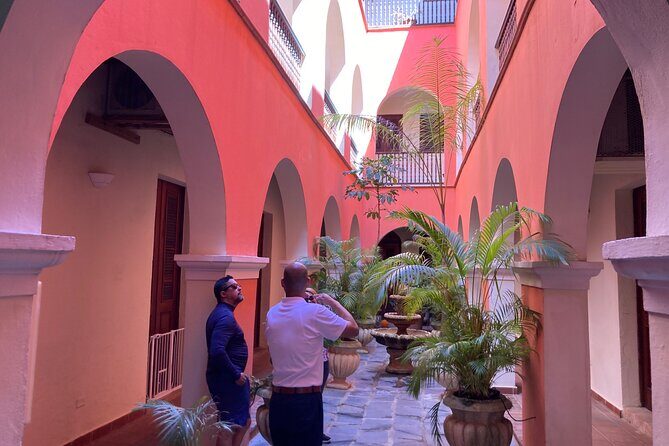
Your walk begins at Plaza de Armas (San Juan, 00916). This is a smart starting point because it’s one of the town’s central squares. You get your bearings right away—where you are, what direction you’ll be moving, and why this area mattered.
From there, the tour flows through the historic grid of Old San Juan. Expect short stops—mostly around 10 minutes each—so you keep moving while still getting enough time to understand what you’re looking at.
And since the tour ends back at the meeting point, you don’t need to fight your way through unfamiliar streets to find your way home. It’s helpful if you’re pairing this with lunch nearby or using public transportation later.
La Puerta de la Bandera: A Flag, a Message, and a City Identity
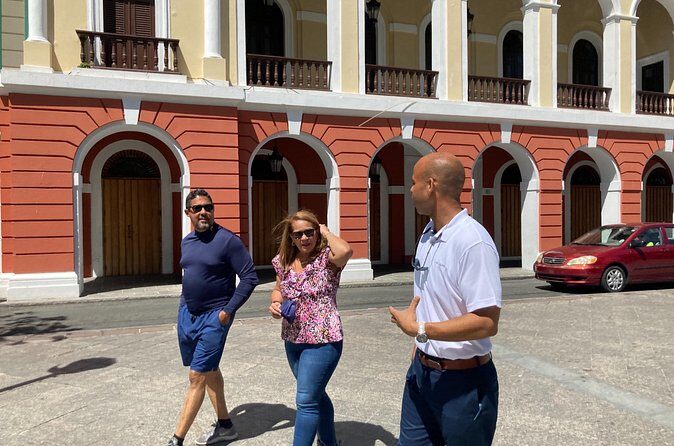
The first stop is La Puerta de la Bandera. It’s an iconic building associated with the Puerto Rican flag, and it’s a great opener because it quickly shifts you from generic sightseeing into the identity question: who belongs here, and how does that show up in public spaces?
I like starting with symbolism like this because it frames everything that comes later. When you move on to plazas and streets, you don’t just see old stone—you understand how public markers carry meaning in a place shaped by outside rule and local resilience.
Plaza de Armas: The Main Square Where Power Shows Up
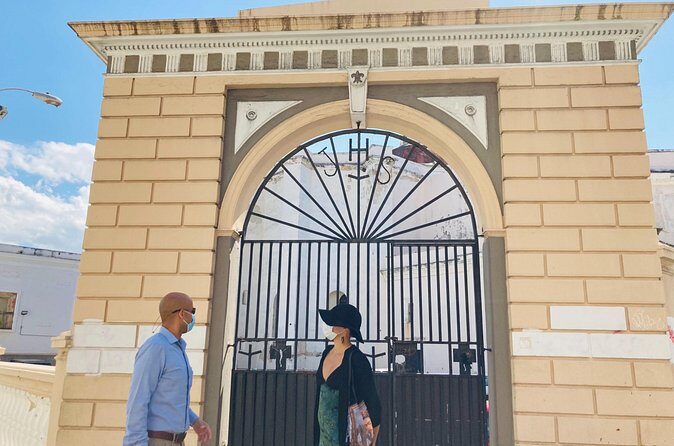
Next up is Plaza de Armas, the main square of Old San Juan. This is the kind of spot where history becomes visible without you needing to search. A plaza like this typically functions as a meeting ground, a staging point, and a place where authority is represented.
The tour’s value here is the linking. You’re not only told that the square mattered; you’re guided to connect the square to the broader colonial-and-military story. That helps you look at other parts of town with a fresh lens.
If you’re new to Old San Juan, this stop alone can prevent future “wait, why is that important?” moments.
You can also read our reviews of more historical tours in San Juan





Calle San Sebastián: Where You Learn the Street Rhythm
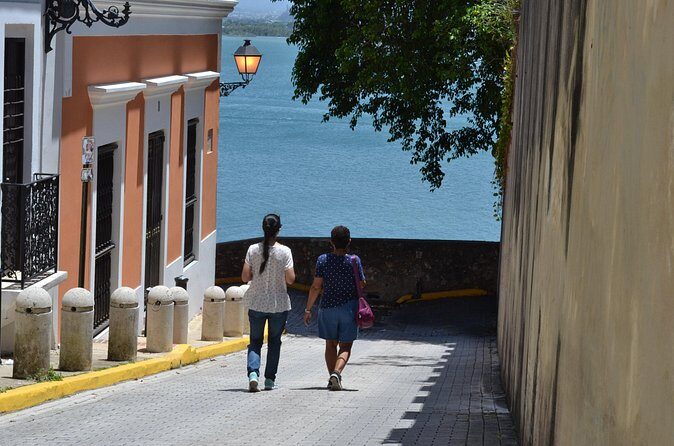
Then you head to Calle San Sebastian, a main street on the northern side of the city. On a map, it’s just a line. On the ground, it’s where the town’s daily movement lives—shops, walkers, and the simple fact that Old San Juan is a real place, not a museum.
This stop is short, but it’s useful. It helps you notice patterns: how streets funnel people, where the pedestrian flow naturally pulls you, and why certain routes became dominant. It’s also a reminder that colonial planning didn’t only shape the past—it shaped how people move now.
Plaza del Quinto Centenario and the El Morro View
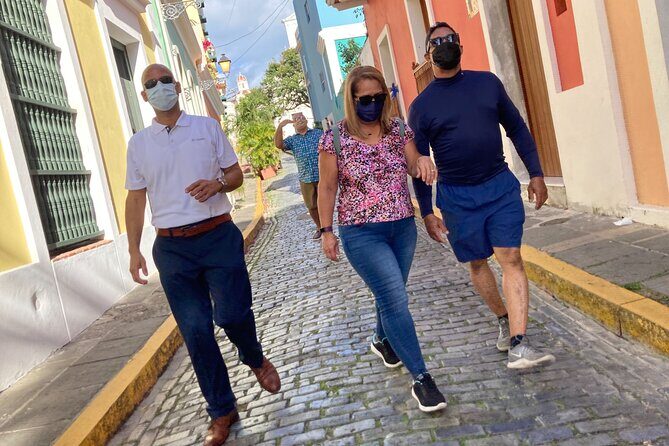
At Plaza del Quinto Centenario, you get an exterior view toward El Morro. This is a great pivot point in the tour. El Morro is one of the big defensive markers of the area, and seeing it from the plaza helps you understand the logic behind the surrounding fortification mindset.
I like that the tour doesn’t rush you into fortress territory. Instead, it gives you the viewpoint first. That makes later landmarks feel connected rather than random.
The square itself works as a breather in the route: a public space, a change in perspective, and a chance to connect military heritage to the geography that made defense necessary.
Eugenio María de Hostos: Politics You Can Point To
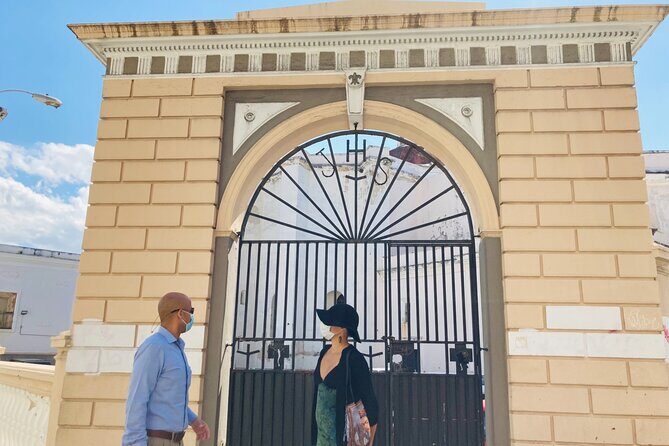
You then visit the Monument to Eugenio María de Hostos, located toward the oldest part of the city. This is one of those stops where history shows up as a person—someone Puerto Ricans remember and publicly honor.
What I appreciate is that the tour doesn’t treat modern Puerto Rico as separate from colonial history. It connects the island’s military and colonial past to the later discussion of Puerto Rico’s relationship as a U.S. territory. Hostos becomes part of that story rather than a lone statue on a corner.
Calle del Cristo and the San Juan Cathedral Exterior
Next is Calle del Cristo, one of Old San Juan’s famous streets. The emphasis here is an external view toward the San Juan Cathedral.
This matters because religious and political power were historically linked in many colonial towns. Even when you’re only viewing exteriors, the street placement and the cathedral’s presence help you understand how central that kind of institution was to community life.
Calle del Cristo is also a reminder that Old San Juan’s “greatest hits” aren’t only for postcards. It’s a walkway that still feels like a real neighborhood street—so the tour keeps you grounded in lived space, not just architecture.
Calle De La Fortaleza: Seeing La Fortaleza Without Entering Fort Areas
The tour ends with an exterior look at La Fortaleza from Calle De La Fortaleza. Even from outside, La Fortaleza signals political importance, and it fits neatly with the tour’s theme: how control and governance shaped what’s in front of you.
One more practical note: the tour excludes Fortress and National Park areas. That means you’ll focus on streets, plazas, and exterior views, not the deeper fortress interiors and park zones. If you’re hoping to walk right up to fort ramparts and spend time inside restricted areas, you’ll need a different experience for that.
That said, for a 1.5-hour walk, this is a smart trade. You get context and key stops without turning it into a full day with longer transit and entry time.
Price and Value: What $75 Buys You Here
At $75 per person, you’re paying for a small-group guided walk with interpretation, not for transportation or entry fees. The good value is that the tour is structured around landmarks that you can appreciate on foot, with explanations that connect them to culture and political status.
Also, it’s not a “just wander with someone” experience. The pace and stop choices are designed to build a narrative: Columbus-era contact, stories of Spanish conquistadors, the later U.S.-territory reality, and how those chapters influence what Puerto Rico looks like today.
If you like tours that answer why things are the way they are, this price makes more sense. If you only want photo stops and don’t care about context, you might feel like you could do the route independently.
Small Group, Big Momentum: When This Tour Really Shines
This tour is a strong match if:
- You want a first-time orientation to Old San Juan
- You prefer walking with a guide over listening to a bus headset
- You like political/cultural context, not just dates and names
- You want a route that fits neatly into a lunch-and-afternoon plan
It may not be the best choice if you’re looking for:
- Fortress or National Park interior access (those areas are excluded)
- A long, slow stroll where you stop for long photo sessions at each location
- Air-conditioned transportation (private transportation and AC vehicle aren’t included)
Practical Expectations: Tickets, Timing, and Weather
You’ll use a mobile ticket, which is convenient and keeps you from juggling paper. The tour runs about 1 hour 30 minutes, and the guide covers a sequence of short stops.
One thing to plan around: it requires good weather. If it’s canceled for poor weather, you’ll be offered a different date or a full refund. This is a good sign—you’re not getting stuck doing a compromised version of the walk in bad conditions.
Should You Book This Old San Juan Walk?
I’d book it if you want the quickest path to understanding Old San Juan beyond the surface. The combination of a small group, a guide like Kaleb who answers questions and tailors the experience to your interests, and a tight route through iconic plazas and streets makes this a smart first step.
Skip it only if your priority is entering fortress and National Park areas, or if you’re the type who prefers a totally independent self-guided day with no narrative thread. For history-and-culture at a walking pace, this tour hits the sweet spot.
FAQ
How long is the Old San Juan Immersive Walk?
It lasts about 1 hour 30 minutes.
How many people are in the group?
The tour has a maximum of 10 travelers.
Where does the tour start?
It starts at Plaza de Armas, San Juan, 00916, Puerto Rico.
Where does the tour end?
The tour ends back at the meeting point.
What is included in the price?
All fees and taxes are included.
What is not included?
Private transportation and an air-conditioned vehicle are not included. Fortress and National Park areas are also excluded from the tour.
Do I need an admission ticket for the stops?
The listed stops are marked as admission ticket free, and the tour focuses on exterior views rather than entries into excluded areas.
Is confirmation sent after booking?
You should receive confirmation within 48 hours of booking, subject to availability.
What happens if the weather is bad?
If the experience is canceled due to poor weather, you will be offered a different date or a full refund.