REVIEW · SAN JUAN
Old San Juan and El Morro Castle Walking Tour
Book on Viator →Operated by Patria Tours Puerto Rico · Bookable on Viator
Old San Juan turns history into a walk. What I like most is the tight mix of plazas, churches, and viewpoints, plus a real El Morro Castle entry stop that goes beyond sightseeing photos. I also like that the guide handles both English and Spanish, so the details land. One possible drawback: this is a sun-and-stone morning, so you’ll want to plan for heat and some steady walking.
You get a well-paced route with lots of important exterior landmarks, then a meaningful interior break inside El Morro. The group stays capped at 40 people, which helps you actually hear the stories instead of just hearing footsteps. If El Morro can’t run due to weather, the operator will typically offer a different date or a full refund, so it’s not a total gamble.
In This Review
- Key things to know before you go
- Old San Juan on foot: what the morning feels like
- Meeting at La Casita de Rones and getting your bearings
- Plaza Darsenas to Plaza de Hostos: defense and the town’s original front door
- Bastión de las Palmas de San José: the cannon view
- La Casa Estrecha: the narrow building lesson
- Capilla del Santo Cristo de la Salud: the miracle story behind the chapel
- La Fortaleza (Palacio de Santa Catalina) and the Governor’s Mansion exterior
- Catedral Basilica Menor de San Juan Bautista: tombs and the long timeline
- La Rogativa, the San Juan Gate, and the Ponce de León residence
- Entering El Morro Castle: where the military story becomes real stone
- Price and value: is $54 a fair deal for this route?
- What to bring (and how to not hate the heat)
- Weather reality: when plans can change near the fort
- Who should book this Old San Juan and El Morro walk
- Should you book Old San Juan and El Morro Castle Walking Tour?
- FAQ
- Where do I meet the guide for the Old San Juan and El Morro Castle walking tour?
- What time does the tour start?
- How long is the tour?
- Is entrance to El Morro Castle included?
- What’s included with the tour besides the El Morro entrance?
- Do I need to pay for the other stops along the way?
- Is the tour suitable for everyone with mobility limits?
- What should I bring?
- Can I cancel for a full refund?
Key things to know before you go
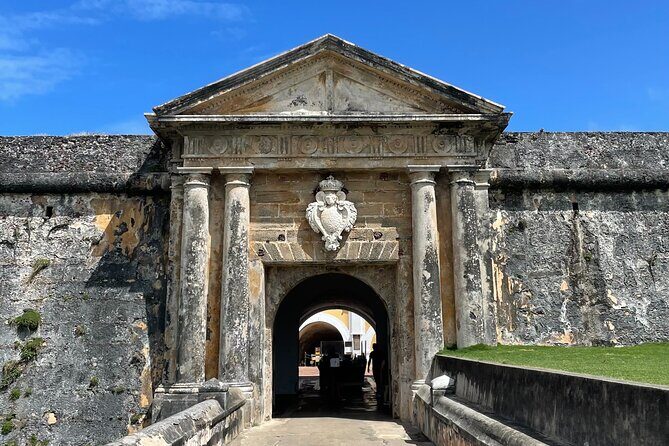
- El Morro Castle entrance is included (a $10 value), plus bottled water during the walk
- Bilingual local guide work in English and Spanish
- Most stops are outdoors or free to enter, so your money mainly supports the guide and the fort
- A capped group size of 40 keeps it easier to ask questions
- The route is best for moderate fitness and comfortable walking shoes
- Expect the morning to run long sometimes if you’re the type who asks questions
Old San Juan on foot: what the morning feels like

Start around 9:00 am and be ready for a classic Old San Juan rhythm: short stretches, quick stops, then a longer viewpoint or church moment. You’re moving through neighborhoods where the buildings are close, the streets are uneven, and the heat can hit fast. Even if you’re not a “history person,” the way the guide connects each spot to the next makes the area easier to understand.
The tour is listed as about 2 hours 30 minutes, but I’d plan a little buffer. If you ask questions, or the group wants extra time at the big sights, the walk can run longer. That’s not a bad sign. It usually means the guide is willing to explain instead of rushing you out.
Group size matters here. With a maximum of 40 people, it’s easier to stay with the guide and actually hear what’s being said. You’ll also get a more personal feel than the big “herd tours.”
You can also read our reviews of more walking tours in San Juan


Meeting at La Casita de Rones and getting your bearings
The meeting point is at La Casita de Rones on C. Comercio (the pink building). The key detail: you meet your guide by the fountain near that spot, next to peer 1, in the tree-covered square at Plaza Darsenas. If you arrive early, take a moment to orient yourself around the harbor area before you start hunting for the group.
This start matters because it sets your perspective right away. Old San Juan is easiest to understand when you start near the water and the fort line, not when you begin somewhere deep in the maze of streets. From here, the tour builds outward logically: defense first, then faith, then politics, then the fort’s inside story.
You’ll also want to make peace with the fact that you’re not doing this one-stop-at-a-time. It’s a true walking tour. If you hate standing in sun for ten minutes, this may feel like a lot. If you’re comfortable with it, you’ll see a lot without paying a long list of separate entry fees.
Plaza Darsenas to Plaza de Hostos: defense and the town’s original front door
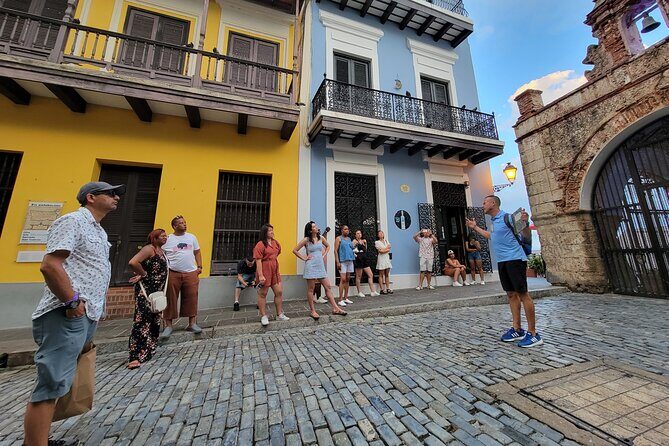
You begin at Plaza Darsenas, right by the harbor. From this area, the guide sets the stage: Puerto Rico as a strategic target, and Old San Juan as the guarded gateway to the island. It’s not abstract. You can literally see why forts and walls mattered.
Next comes Plaza de Hostos, tied to the old approach into the town. It’s described as the original entryway of Old San Juan through a demolished gate. That kind of detail is why I like guided walks here: the town map alone won’t explain what used to stand, and why the streets feel like they do.
These early stops are short on purpose. You’re learning the “why” before the “what,” and it keeps you from feeling lost. The outdoor pacing also means you’re not stuck inside early while everyone is still sweating off the wait for the group.
Bastión de las Palmas de San José: the cannon view
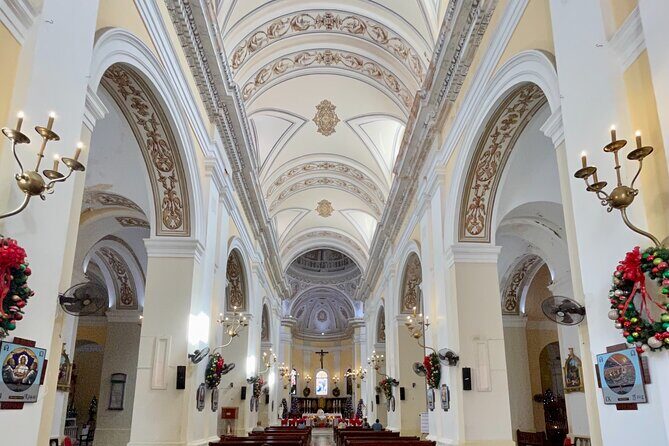
At Bastión de las Palmas de San José, you get an observation point overlooking the bay of San Juan. This spot was built to fire cannons at enemy ships, and you’ll feel the logic the second you look out over the water.
Viewpoints can be hit-or-miss on tours. Here, it’s not just scenery. The guide connects the view to the military thinking behind the fortifications. You start to see the town like a map of movement—where ships would approach, where defenders could respond, and why walls weren’t just decoration.
This stop is quick, but it does a lot of work. If you remember only one “outside viewpoint” moment, this is the one I’d pick. It gives context for the fort entrance later.
La Casa Estrecha: the narrow building lesson
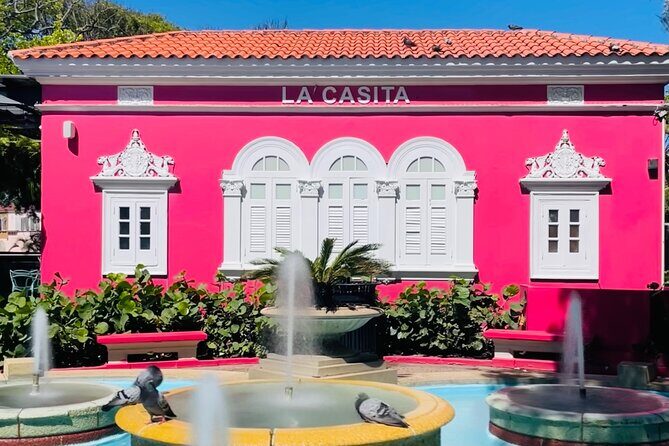
Then you hit La Casa Estrecha, known as North America’s narrowest building. It’s brief, but it’s a fun gut-check stop: Old San Juan isn’t only big monuments. It’s also the quirks created by tight space, older building patterns, and centuries of change around existing structures.
This is a good moment to reset your brain. After military and town-logic talk, a small, specific curiosity keeps things lively. It’s also a reminder that the area is lived-in history, not a theme park set.


Capilla del Santo Cristo de la Salud: the miracle story behind the chapel
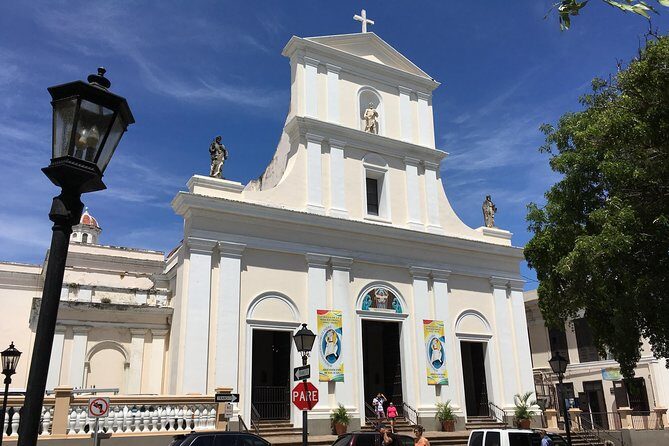
Capilla del Santo Cristo de la Salud is the 18th-century chapel stop, built after a miracle connected to the exact site where it stands. This is the point in the morning where the tour shifts from ships and gates to people and belief.
If you’ve ever wondered why certain towns seem to treat churches like community centers, this kind of stop answers that. The guide explains how religious events shaped local identity, not just faith practice. You’re not asked to memorize dates. You’re given the thread that links religion, public life, and the island’s cultural blend.
The stop is short, but it adds emotional weight. And that matters, because later you’ll be walking through stone built for war. It’s useful to remember that the same streets also carried hope.
La Fortaleza (Palacio de Santa Catalina) and the Governor’s Mansion exterior
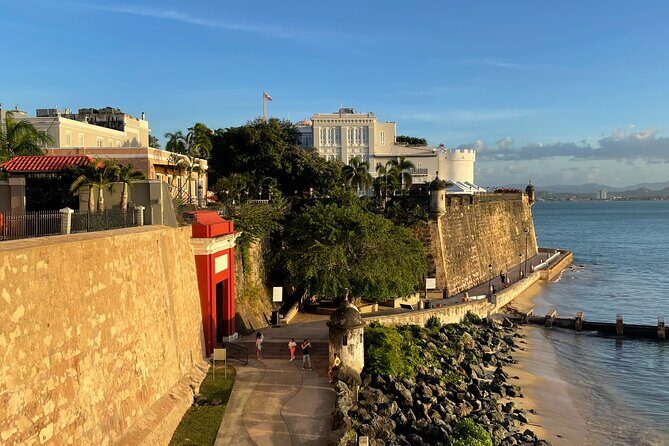
La Fortaleza—Palacio de Santa Catalina—is one of those landmark exteriors that makes you feel the power of place. You’ll see the Governor’s Mansion as a World Heritage Site from the outside. This is a “look, then understand” moment rather than a “walk inside and wander.”
Even without entering, the stop gives you an important angle: colonial administration. The fort and the churches explain how people survived and worshipped; the governor’s residence explains who ruled and how decisions shaped daily life.
This is also a good photo stop, but keep it practical. The building is best in daylight, and the walking sun can be intense around mid-morning. If you’re saving phone battery, pick a few strong angles and move.
Catedral Basilica Menor de San Juan Bautista: tombs and the long timeline
Next is the Catedral Basilica Menor de San Juan Bautista, one of the oldest cathedrals in the Americas. You’ll go inside and see tombs connected to major figures, including Juan Ponce de León and Alonso Manso (noted as the first bishop in the New World).
This stop is about continuity. You’re moving from the town’s early entry into a central religious site, and then into a story about governance and colonization. The cathedral helps connect the dates across centuries without you feeling like you’re reading a textbook.
Inside also gives you a small break from the outdoors. Even on a warm day, cathedrals can feel cooler and quieter. Use that time to listen for the details the guide offers—because the most interesting parts here are the stories tied to the people buried inside.
La Rogativa, the San Juan Gate, and the Ponce de León residence
After the cathedral, you’ll see La Rogativa, a sculpture tied to the procession held during the British attack of 1797. It’s the kind of public art that turns a historical event into something you can stand in front of and actually picture.
Nearby, you’ll also see the San Juan Gate, described as the last standing gate of the town. That’s a big deal. Many towns have gates that are replicas or partial remains. Here, the fact that something still stands changes how the story feels—less like a legend, more like a trace.
Then the tour includes a stop connected to the Ponce de León family residence, said to have been a home for over 200 years and identified as Puerto Rico’s oldest standing structure from the early 16th century. This is one of those moments where you’ll feel the building’s age in your bones. It’s not just a view. It’s a physical link to the earliest layers of settlement.
If you love “before-and-after” thinking, this sequence is satisfying. You go from attack and procession, to a surviving gate, to the oldest surviving structure—each one answering a different version of the same question: how did the town keep going?
Entering El Morro Castle: where the military story becomes real stone
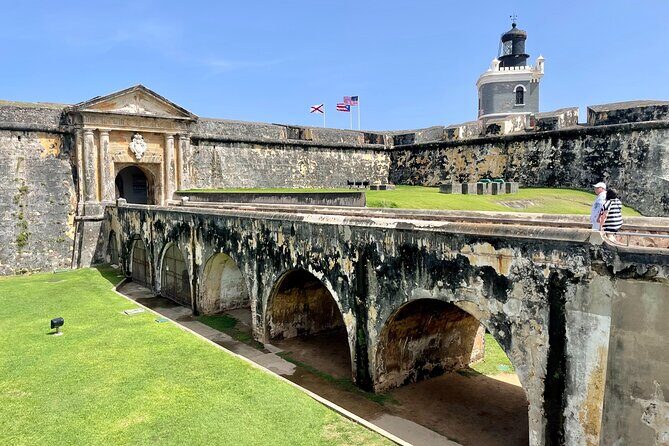
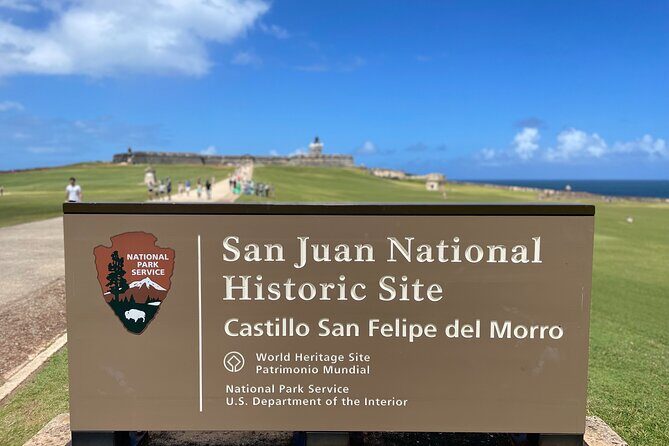
The main interior payoff is Castillo San Felipe del Morro (El Morro). Here you get entrance to the fort, and the guide focuses on the Spain–USA military history tied to the castle’s role. This is where the earlier cannon-view stop makes sense. The walls stop being a backdrop and start acting like an explanation.
You’ll spend about 45 minutes inside, and there’s a bathroom and water break built into the experience. That small detail is worth its weight in gold on a walking tour. You don’t have to time your own needs. You can focus on the fort without worrying about finding a place later.
This portion is also the most valuable part of the ticket. The rest of the route is largely exterior landmarks and free entry sites, so the fort is the piece you’re paying for through the tour. The $54 price doesn’t look just like sightseeing once you remember the El Morro entrance is included.
One more practical note: the tour ends at El Morro. After you go inside, you can stay in the fort to explore on your own. Or you can walk back into town with the guide. That flexibility is great if you want “guided learning first, then freedom.”
Price and value: is $54 a fair deal for this route?
Let’s talk value in plain terms. You pay $54 per person for about 2.5 hours of guided walking, plus a fort entrance fee, plus bottled water and a certified guide. The fort is listed as a $10 value entrance, and most other stops are described as free entry.
So you’re not paying for a pile of separate museum tickets. You’re paying for the guide to connect the dots across Old San Juan. That’s the difference between walking around on your own and actually understanding why each stop matters.
If you’re going to El Morro anyway, the included entry makes the math easier. If you also want the churches and town landmarks explained, then the guided portion is what you’re really buying. The price feels more reasonable when you picture the alternative: multiple tickets, plus you still needing someone to make sense of the walls, gates, and shifting powers.
Where you might feel the cost: if you only care about one or two highlights and you don’t enjoy walking. This tour is not for “I’ll just pop in for a photo and leave.” It’s a guided morning built on momentum.
What to bring (and how to not hate the heat)
The tour provides bottled water, but you should still treat this like a warm-weather walk. Wear comfortable walking footwear. Bring sunscreen and sunglasses. Consider a hat or cap even if you’re usually a no-hat person. Your goal is simple: keep your energy steady so you can enjoy the stories, not just survive the sun.
Also keep your pace. Some stops are brief, but the total movement adds up. If you have walking limitations, this is not the right fit. The tour is marked as needing moderate physical fitness.
If you’re visiting during a hot spell, start with a light breakfast and don’t under-hydrate before you meet. The guide will emphasize staying hydrated, and you’ll be in the best shape to enjoy every stop instead of calculating the next shaded bench.
Weather reality: when plans can change near the fort
This experience requires good weather. That matters because the route depends on outdoor segments and a fort visit that can be affected by conditions. The operator states that if it’s canceled due to poor weather, you’ll be offered a different date or a full refund.
If you’re traveling on a tight schedule—like a cruise day with limited time—keep an eye on the forecast and give yourself a little slack. A walking tour across Old San Juan can absorb small delays, but weather-related changes can’t always be rushed.
Who should book this Old San Juan and El Morro walk
You’ll love this tour if you want:
- a guided way to understand Old San Juan’s layout, from gates and plazas to defense
- the El Morro interior without having to plan it all yourself
- stories about the Spain-to-US military footprint, plus religious and civic landmarks
You may want to skip it if:
- you dislike long walks in sun
- you have mobility limits and can’t handle uneven streets and standing time
- you want a fully indoor experience (this isn’t built that way)
This is also a strong option if you’re the kind of person who likes to ask questions. The tour can run longer when you do, and that usually means you’re getting more value.
Should you book Old San Juan and El Morro Castle Walking Tour?
Yes, you should book it if you want a structured, local-guided morning that turns Old San Juan from confusing streets into a connected story. The standout value is the combo: free/free-ish exterior landmarks plus an included El Morro entrance. You’ll walk away knowing why the town looks the way it does, not just having seen it.
If you’re heat-sensitive or mobility-limited, rethink it and choose a different format. But for most visitors—especially history-minded ones who enjoy walking—this is a smart, high-value way to spend your morning in San Juan.
FAQ
Where do I meet the guide for the Old San Juan and El Morro Castle walking tour?
You meet at La Casita de Rones on C. Comercio, San Juan (00901). Participants should meet the guide by the fountain next to La Casita de Rones (pink building) in the tree-covered square near peer 1.
What time does the tour start?
The tour start time is listed as 9:00 am.
How long is the tour?
The duration is about 2 hours 30 minutes (approx.).
Is entrance to El Morro Castle included?
Yes. Entrance fee to El Morro Fort is included, listed as a $10 value.
What’s included with the tour besides the El Morro entrance?
It includes a certified tour guide and bottled water.
Do I need to pay for the other stops along the way?
Most of the other stops listed are marked as free admission tickets.
Is the tour suitable for everyone with mobility limits?
The tour requires moderate physical fitness and is not recommended for travelers with walking limitations.
What should I bring?
Bring comfortable walking footwear. Sunscreen, sunglasses, and hats or caps are listed as not included, so you should plan to bring them.
Can I cancel for a full refund?
Yes, free cancellation is available. You must cancel at least 24 hours before the experience’s start time for a full refund.