REVIEW · SAN JUAN
Afro Puerto Rican Folklore Bomba Class and Live Music
Book on Viator →Operated by Salsa Tours PR · Bookable on Viator
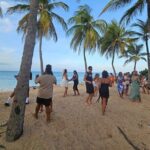
Bomba has a way of taking over the evening. This class puts you right on the sand near Parque Jose Celso Barbosa so you learn the rhythm by moving, not just watching. I love the live drumming plus dancer-led rhythm (you feel the call-and-response in your body), and I also love the history context the instructors weave into the steps. The only real drawback to plan around is the surface: the ground near the beach area can be rocky in spots, so you’ll want comfortable, grippy footwear.
Expect a friendly, no-judgment group and a small class size (up to 20). Instructors Jose Angel Catala and Charlotte Serrano guide you through Bomba basics, using the skirts as part of the experience, while the music pushes the energy. Most people can do it, even if you’re starting from zero—just be ready to sweat a bit and learn fast.
In This Review
- Key Highlights You’ll Actually Feel
- Bomba in San Juan: Why This Beach Class Clicks
- Finding the Spot Near Parque Jose Celso Barbosa (It’s Not Right at the Statue)
- The Timing: 5:30 PM Arrival, Then Dancing Runs 6:00–7:15 PM
- What Happens During Class: From Basics to Real Rhythm Exchange
- 1) You get set up fast
- 2) You learn the basic footwork and rhythm cues
- 3) You practice call-and-response with drummers
- 4) You bring it together in a shared groove
- Live Music and the Instructor Pairing: Jose Angel Catala + Charlotte Serrano
- The Ground Reality: Rocky Spots, Skirts, and Staying Comfortable
- Price and Value: Is $35 a Fair Deal?
- Who This Class Is Best For (And Who Might Want to Skip)
- Practical Tips So You Don’t Lose Time at 5:30 pm
- Should You Book This Bomba Class in San Juan?
- FAQ
- What is the price of the Bomba class?
- How long is the experience?
- Where does the class take place?
- What time should I arrive?
- Is there live music during the class?
- Who teaches the class?
- Is this class good for beginners?
- How many people are in a group?
- What happens if weather is bad?
- What is the cancellation policy?
- Are service animals allowed?
Key Highlights You’ll Actually Feel
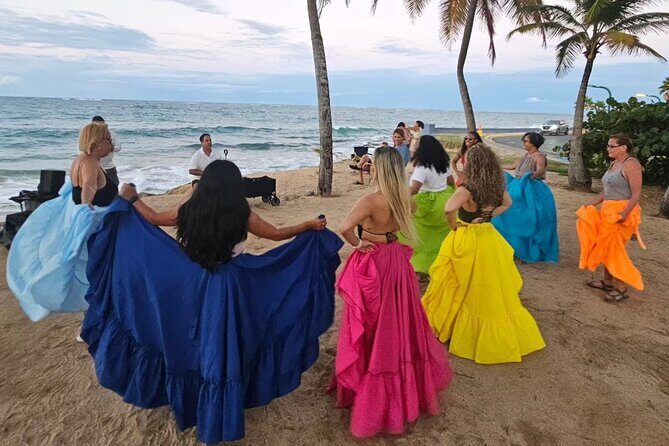
- Live drumming that responds to you: dancers and drummers trade the lead, so you’re part of the music, not sitting beside it.
- Hands-on instruction in a beach setting: you’re learning in the same outdoor spirit where Bomba often shows up in community celebrations.
- Two instructors with real Puerto Rican folklore experience: Jose Angel Catala brings decades in folklore performance, and Charlotte Serrano teaches with energy and patience.
- Petticoat skirts as a confidence boost: the costuming isn’t just for photos; it helps with movement and swagger.
- A tight 1-hour-ish format with real momentum: you’ll start learning steps quickly and keep going nonstop through the class time.
- Small group size: with a max of 20, you’re more likely to get attention when you’re figuring out the rhythm.
Bomba in San Juan: Why This Beach Class Clicks
If you’ve never tried Bomba, here’s the simple version: it’s music and dance that bounce off each other. In many traditions, you follow the rhythm. In Bomba, the rhythm is a conversation. The drummers set a musical base, and dancers answer with their movement—then the drummers react again. That back-and-forth is the heart of what you’ll practice during this class.
What makes doing it on the beach work so well is the pacing. You don’t have the pressure of a theater floor or polished studio timing. You have space, sound carry, and an outdoor vibe that fits how Bomba is often performed at community gatherings. When the drums come alive, your body understands faster than your brain does.
And the instructors don’t treat it like a museum lesson. They teach you to get your rhythm going, then they help you stay safe and comfortable as you learn. You’ll also get some context—enough history to make the dance feel meaningful, not heavy.
You can also read our reviews of more tours and experiences in San Juan.

Finding the Spot Near Parque Jose Celso Barbosa (It’s Not Right at the Statue)
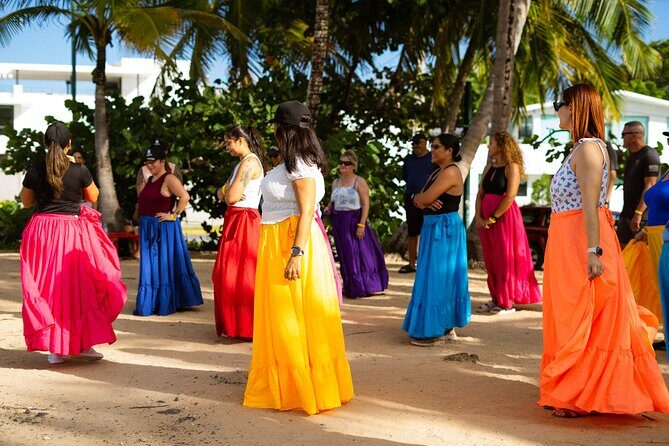
Meeting point confusion is the only thing that could derail your evening, because the description emphasizes the statue area—but the practical meeting point is slightly different.
You start at Playa El Último Trolley, Calle Park Boulevard antes (FX32+3GG), on Cll Soldado Serrano in San Juan. The class area is associated with Parque Jose Celso Barbosa, and you should look for the group near the statue area on the beach side—but it’s across the street from the statue and to the right on the beach.
My practical advice: arrive a little early and do a quick visual sweep. If you don’t see your group, ask around right near the statue area and walk to the beach-right side. Don’t wait quietly expecting someone to magically materialize from thin air.
Also, save your confirmation message on your phone. When you’re in “5:30 pm I’m a little late” mode, it helps to double-check the exact meeting point details fast.
The Timing: 5:30 PM Arrival, Then Dancing Runs 6:00–7:15 PM
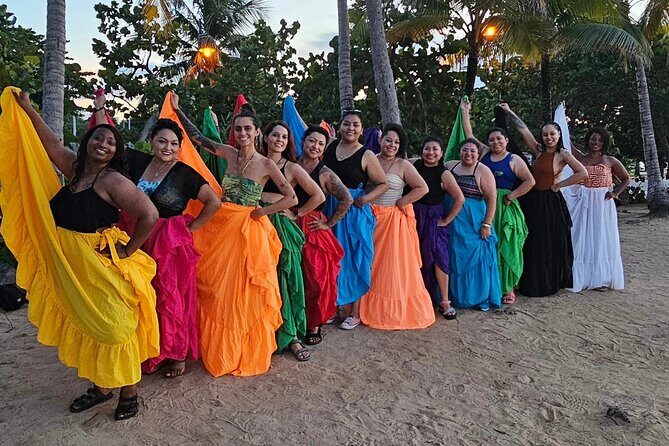
Your start time is 5:30 pm. That’s the call time, not the moment the dancing is already underway. Plan to be there by 5:30 so you can settle in and get ready.
The class itself runs from 6:00 pm to 7:15 pm (about 75 minutes). Some people expect a full hour exactly; what you get is a fairly continuous session where the instructors keep moving you along—learning steps, trying variations, and practicing the dancer/drummer exchange.
Because it’s an early-evening schedule, you’ll likely be dancing as daylight fades. A few people specifically mention sunset timing and the ocean view. Even when the light isn’t perfect, the setting stays scenic and the mood stays social.
What Happens During Class: From Basics to Real Rhythm Exchange
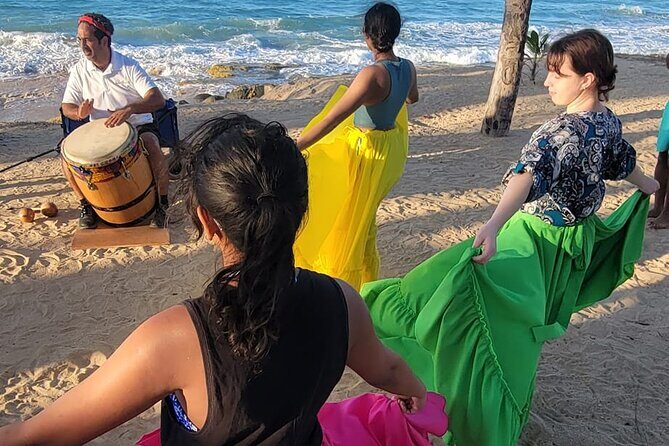
Here’s how this class tends to unfold once it starts.
1) You get set up fast
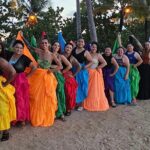
You’ll be guided into the Bomba experience style right away. A common part of the class is the use of petticoat skirts. They can feel intimidating at first—until you realize they’re part of how the dance shows movement and rhythm.
If you’ve never worn a skirt like this for dancing, don’t worry. The instructors give you enough structure to feel like you can move without second-guessing every step. The goal is participation, not perfection.
A few more San Juan tours and experiences worth a look
2) You learn the basic footwork and rhythm cues
Bomba isn’t about fancy tricks. It’s about rhythm clarity—how your body keeps time, how you respond, and how you hold your presence when the drums shift.
You’ll practice enough to get the pattern into your muscles. People consistently describe it as nonstop and energizing, so be ready for an active hour-plus.
3) You practice call-and-response with drummers
This is the signature moment. The dynamic exchange is simple in theory: dancers set the rhythm with movement; drummers respond. In practice, you’ll learn quickly that the exchange feels good when you commit to the beat rather than try to “control” everything.
You don’t need to be a dancer to get it. You just need to show up, listen for the drum changes, and follow the instructor’s cues.
4) You bring it together in a shared groove
As the session continues, you’ll likely get a sense of how Bomba works socially: you’re part of a circle, you see others moving, and the music shapes how the whole group flows. The class atmosphere stays welcoming, even if people are at different skill levels.
Live Music and the Instructor Pairing: Jose Angel Catala + Charlotte Serrano
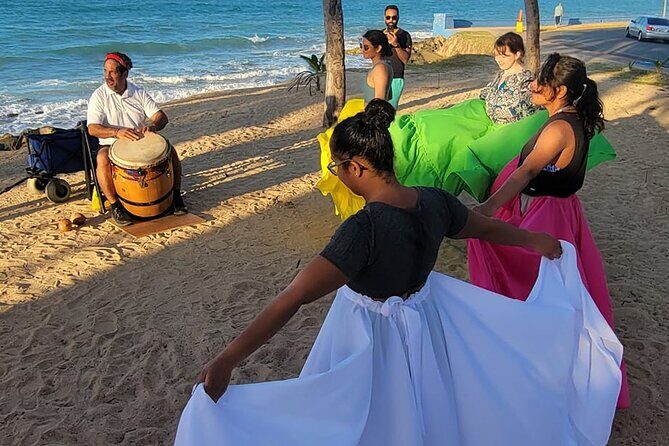
One reason this tour stands out for me is the instructor mix. You’re not stuck with a single teaching style.
- Jose Angel Catala is described as a passionate Bomba dancer and musician with over two decades in Puerto Rican folklore. That matters because he can explain what you’re doing in terms of tradition, not just counting steps.
- Charlotte Serrano is a professional dancer from Puerto Rico skilled in multiple dance genres. Her teaching comes through as lively and encouraging, with clear engagement and a push to get you moving.
When live music is involved, the quality of the teaching matters even more. The best part isn’t just that drums sound good—it’s that the class structure helps you translate sound into movement quickly.
If you like learning “why” something works (not just copying it), you’ll probably enjoy the way the instructors frame the dance’s origins and evolution.
The Ground Reality: Rocky Spots, Skirts, and Staying Comfortable
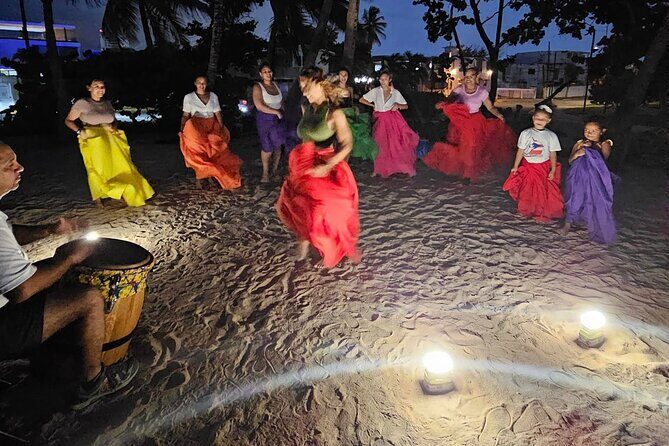
The class happens outdoors near the beach area, and that means the floor may not be studio-smooth. One practical concern that comes up is that the ground can be rocky in places, with rough spots like tree stumps.
So here’s how you should plan:
- Wear comfortable, grippy shoes you can dance in for an hour.
- Avoid anything slippery or anything you can’t move in quickly.
- If you’re nervous about footing, focus on stable steps and let the rhythm guide you—don’t try to sprint or hop.
The skirts can actually help some people feel more confident because they add structure to motion. But they don’t remove the need for foot control on uneven ground.
Price and Value: Is $35 a Fair Deal?
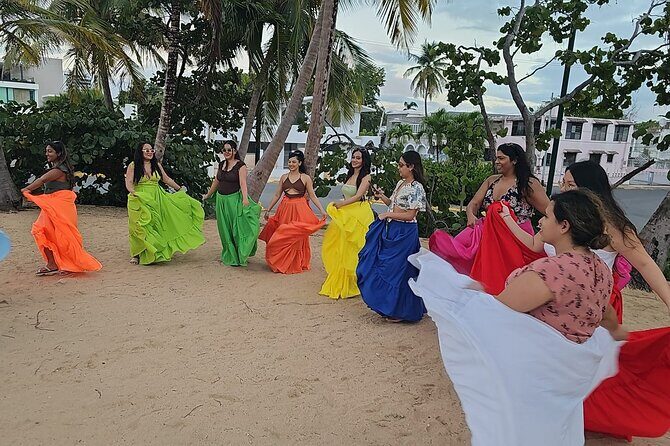
At $35 per person, this isn’t a huge spend, especially when you compare it to what you’re getting: live music, two instructors, and a small-group setting right on the beach.
What makes it feel like good value is the “active learning” component. You’re not watching for an hour and hoping you remember the steps later. You’re dancing with real drumming and getting corrections and cues in real time. People also describe the session as nonstop, which usually means you’re not paying for a lot of downtime.
So unless you’re the type who hates getting sweaty and learning quickly, the price-to-experience ratio is strong.
Who This Class Is Best For (And Who Might Want to Skip)
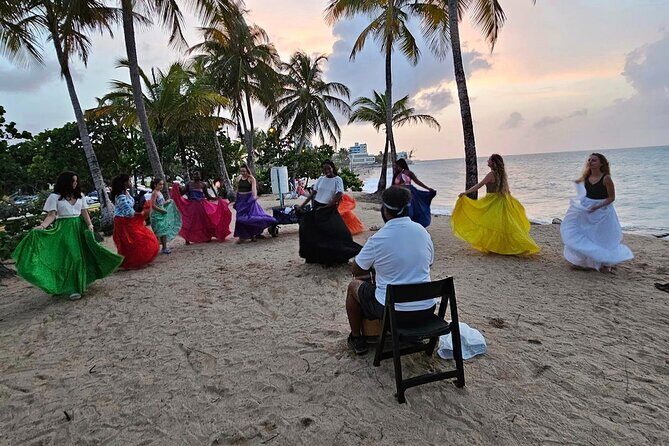
This is ideal if you want:
- A hands-on cultural experience that’s more than a photo stop
- Something beginner-friendly where instructors keep you moving
- A fun, early evening activity with real music and real energy
- A memorable experience you can share with friends or family
It can also be a great pick for special occasions. At least one person described using the class for a family celebration with multiple generations in mind.
Who might hesitate: if you have mobility limits that make uneven ground risky, or if you strongly dislike being actively involved in group dance. The class says most travelers can participate, and service animals are allowed, but it still involves dance movement and outdoor footing.
Practical Tips So You Don’t Lose Time at 5:30 pm
Here are the small things that save you stress:
- Arrive early and do a quick location check near the statue area then move to the beach-right side.
- Bring a small water bottle and wear breathable clothes. You’ll work up energy.
- Expect interaction with the group and music. If you’re shy, it’s still manageable—you can stay focused on your own rhythm and listen for cues.
- If it looks cloudy or stormy, keep an eye on the weather. The experience depends on good weather, and options exist if it gets canceled for that reason.
Finally, one honest warning: a small number of people reported no-shows or confusion at meeting time. That’s not the vibe most people report, but it’s enough to justify common-sense caution. Save your confirmation, keep your phone charged, and if you don’t see your group after checking the correct spot, don’t assume it’s still “coming soon.” Ask locally right away.
Should You Book This Bomba Class in San Juan?
I’d book it if you want an authentic Puerto Rican cultural experience that’s physical, musical, and beginner-friendly. You get live drumming, a dancer-led rhythm approach, and instruction from Jose Angel Catala and Charlotte Serrano, all in a small-group outdoor setting near the Parque Jose Celso Barbosa statue area.
I’d think twice if you’re very sensitive to uneven ground or you can’t handle the idea of active movement in an outdoor class. Also, if you’re the type who needs guaranteed-perfect logistics, arrive early and be extra sure you’re at the right beach-right meeting spot.
If you’re game for learning by doing, this is one of the best ways to experience Bomba in San Juan without turning it into a spectator sport.
FAQ
What is the price of the Bomba class?
The price is $35.00 per person.
How long is the experience?
It’s about 1 hour for the class, with the schedule listed as 6:00 pm to 7:15 pm and an earlier 5:30 pm call time.
Where does the class take place?
The class is associated with the Parque Jose Celso Barbosa statue area near Ocean Park Beach. The meeting point is provided at Playa El Último Trolley, and the beach-side location is across the street from the statue and to the right.
What time should I arrive?
Start time is 5:30 pm, which is meant to give you time to find the group and get ready before class begins.
Is there live music during the class?
Yes. The class includes live music and drumming as part of the Bomba dance interaction.
Who teaches the class?
The class is taught by Jose Angel Catala and Charlotte Serrano.
Is this class good for beginners?
Yes. It’s described as welcoming for all skill levels, including people new to Bomba.
How many people are in a group?
There is a maximum of 20 travelers.
What happens if weather is bad?
The experience requires good weather. If it’s canceled due to poor weather, you’ll be offered a different date or a full refund.
What is the cancellation policy?
Free cancellation is available up to 24 hours in advance of the experience start time for a full refund.
Are service animals allowed?
Yes, service animals are allowed.