REVIEW · SAN JUAN
San Juan Surfing Lessons: Ride the Waves in Puerto Rico
Book on Viator →Operated by PRSURF San Juan · Bookable on Viator
Forget the usual beach day; catch real waves.
In San Juan, this 2-hour surf lesson blends on-the-sand basics with in-water coaching from Red Cross-certified lifeguards, so you’re not just watching from shore. It’s set up as a private experience for your group, with a mobile ticket and a simple return to the meeting point.
I love the focus on skill-level instruction, built around what you can already do. You start with fundamentals on land, then move into the water at a pace that matches your comfort.
I also like that the surf board is included, so you can travel lighter and spend less time figuring out gear. The one catch: surf conditions follow the weather, so conditions can shift based on patterns that day.
In This Review
- Key things to know before you paddle out
- Where You Meet in Isla Verde (and Why the Location Helps)
- Two Hours Total: The Lesson Flow That Gets You on Waves Fast
- First stop: learning basics on the sand
- Second stop: transition into the water
- Third stop: your independent surfing hour
- Certified Lifeguard Instructors: The Safety and Coaching Combo
- What’s Included in the $85 Price (and How It Adds Up)
- Surf Conditions and Weather: Your Only Real Variable
- What to Bring (Because Your Board Won’t Do It for You)
- Who This Lesson Suits Best in San Juan
- The Best Way to Get Results (Without Overthinking It)
- Should You Book This San Juan Surf Lesson?
- FAQ
- What’s the duration of the San Juan surfing lesson?
- How much does it cost?
- What’s included in the price?
- Where do we meet, and where does it end?
- Do instructors teach beginners?
- How is the lesson structured?
- Are the instructors certified?
- Is this experience private?
- What happens if weather affects surfing conditions?
Key things to know before you paddle out
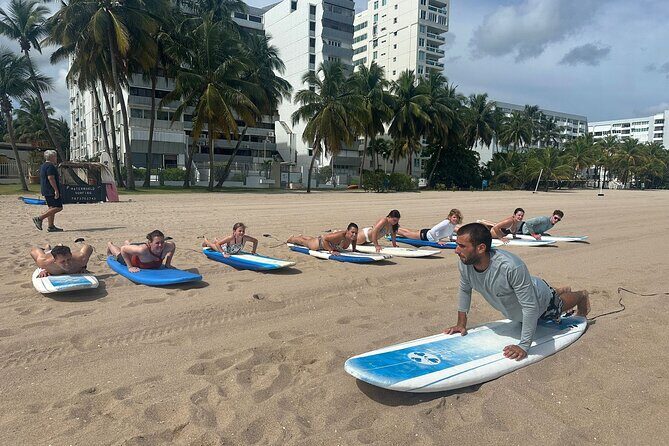
- On-sand coaching first so you learn the motion before you’re fighting waves
- Red Cross-certified lifeguard instructors for real safety and practical guidance
- Two-part experience: about one hour coached, then one more hour to surf on your own
- Board included in the price, which makes the value easier to swallow at $85
- Tailored for your level, from true first-timers to people who have tried before
- Weather can change everything, so you’ll want a flexible mindset
Where You Meet in Isla Verde (and Why the Location Helps)
You’ll meet at the Courtyard by Marriott Isla Verde Beach Resort, at 7012 C. Avenue Boca de Cangrejos, Carolina, PR 00979. That’s a practical starting point because it’s clearly tied to a hotel area, and it’s also described as near public transportation. For a short, two-hour activity, that matters. You don’t want half your day eaten by complicated transfers.
You’ll end back at the same meeting point. That makes the plan easy to fit into your trip day. After your session, you can head to lunch, walk the beach, or just recover before your next outing. If you like your tours simple and direct, this format will feel familiar.
One more small win: service animals are allowed, and the activity notes that most travelers can participate. So it’s built to be reachable for a wide range of visitors, not only advanced surfers.
A few more San Juan tours and experiences worth a look


Two Hours Total: The Lesson Flow That Gets You on Waves Fast
This is an approximately 2-hour experience. The time split is clear and smart:
- About one hour with an instructor
- About one additional hour to surf independently
That structure is the heart of the value. You get coached long enough to build the basics, then you get enough open time to actually feel progress. It’s the difference between a lesson that teaches you theory and one that lets you try and adjust in real water.
First stop: learning basics on the sand
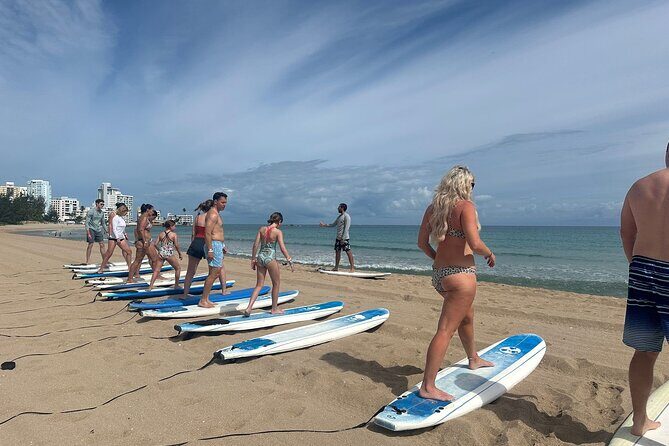
You begin by learning fundamental techniques on land. This step usually sounds slower than just going straight into the ocean, but it’s a big reason why first-timers get results. On the sand you can practice the body positioning, paddling rhythm, and how to move toward standing without the pressure of a moving board.
Many first-timers benefit from this because surfing asks you to do several things at once: paddle, watch the wave, angle the board, then pop up. Sand drills help you separate those tasks.
Second stop: transition into the water
Once you’re comfortable with the basic motions, you transition into the water. Instructors focus on what changes once you’re dealing with waves and water turbulence. Expect instruction that’s practical and immediate—things like where to place your hands, how to keep your balance as the board moves, and when to push for the wave versus when to wait.
If you’re paired with a strong day of surf, you may still feel the workout. That’s normal. You’re using muscles for paddling, core control, and quick stance changes, and you’re doing it repeatedly in waves.
Third stop: your independent surfing hour
After the guided portion, you’re out there on your own for about an hour. The point isn’t that you’re left completely alone; it’s that you’ve been coached enough to try the basics with more freedom. You’ll usually learn faster in this stage because you’ll be able to repeat what you practiced and correct based on what you feel.
Some people end up surfing longer than expected, while others treat the hour like a stamina checkpoint. Either way, you leave with real ocean time, not just a quick taste.



Certified Lifeguard Instructors: The Safety and Coaching Combo
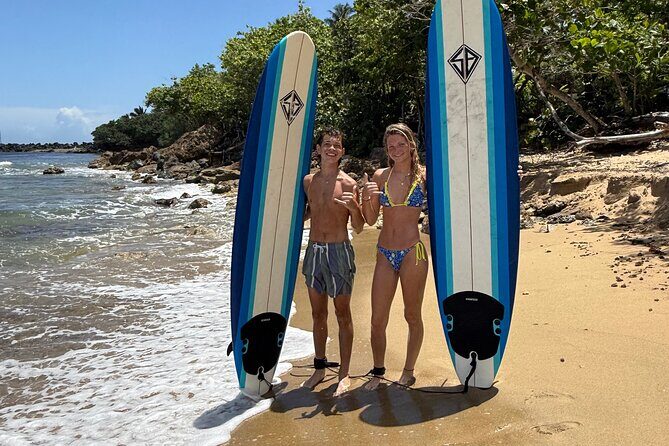
The instructors are described as certified life guards (Red Cross). That’s a reassuring baseline because surfing has obvious water risks, from strong currents to wipeouts. Having lifeguard certification means you’re working with people trained for safety and quick decision-making.
But what you really feel during the session is not paperwork—it’s attention. Past participants praised instructors for being patient and observant, staying close and actively directing learners as they try to catch waves.
Names that have shown up in instruction experiences include Luis, Ella, Gustavo, and Nicholas. The common thread: instructors who stay engaged, give straightforward tips, and adapt their guidance when someone needs a different approach.
If you’re brand new, this kind of coaching is what turns chaos into progress. You’re not guessing. You’re adjusting with someone watching your posture and timing.
What’s Included in the $85 Price (and How It Adds Up)
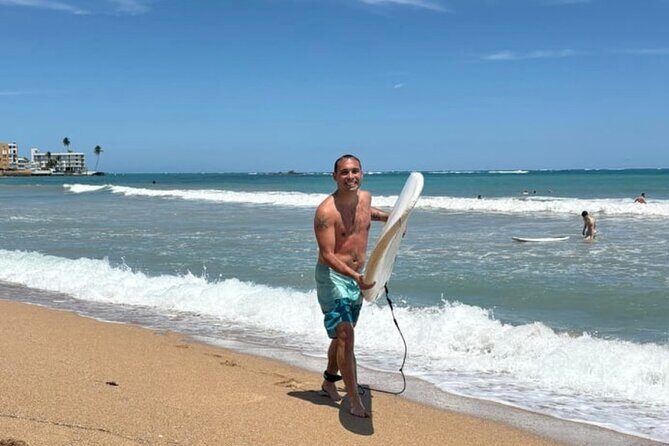
At $85.00 per person, you’re paying for a short, high-action lesson with real instruction time. The big included value is the surf board. For many visitors, that alone lowers the hassle. You don’t have to worry about renting gear elsewhere or hauling boards around.
What’s not included is an air-conditioned vehicle. In other words, you’re walking yourself through the short logistics based on the meeting point. For many people, that’s fine—especially in an area with hotels and walkable access—but it’s worth noting if you planned to rely on transport.
Also, the experience is labeled as private: only your group participates. That’s another value point. You’re not stuck waiting for a large class to cycle through the same basic skills. Even when you’re not the only person, the setup is clearly designed around your group.
At this price, the question isn’t whether it’s cheap. It’s whether you’ll get enough useful ocean time. With the one-hour coached / one-hour self-surf format, you do.
Surf Conditions and Weather: Your Only Real Variable
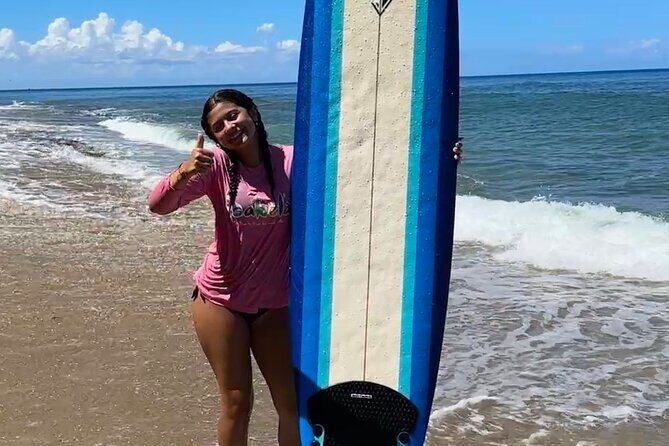
Surfing conditions are heavily influenced by weather patterns. That doesn’t mean the day is a bust—it means your experience depends on what the ocean is serving.
Here’s what that means for your expectations:
- You might arrive with hopes for easy wave riding.
- You might end up with stronger surf and more challenging paddling.
- The instructors should still tailor coaching to your skill level, but the ocean’s behavior sets the baseline difficulty.
One caution from real-world feedback: board quality and sizing can vary. One participant was disappointed with foam boards and that there was only one size available. That doesn’t mean it will happen to you, but it’s a useful reminder to show up ready to work with the gear you’re given.
If you want a smooth first day, you’ll feel better when you arrive with a flexible mindset. Think of it as a lesson plus a workout, not a guaranteed highlight reel.
What to Bring (Because Your Board Won’t Do It for You)
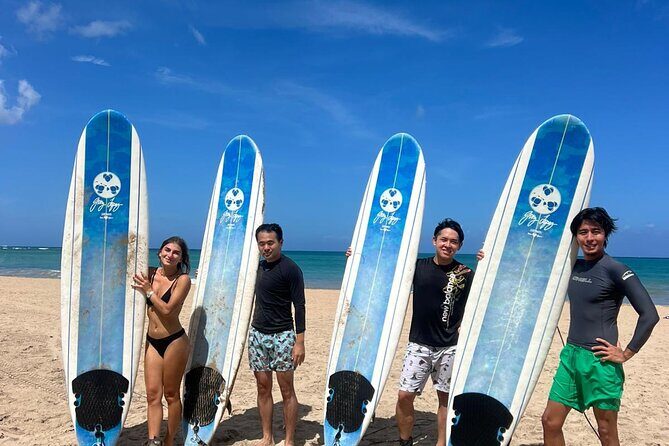
The tour info doesn’t list an equipment checklist, but the practical message from people who’ve done it is simple: bring yourself and be sun-ready.
Plan on:
- Sunscreen, including extra attention to your back and legs. Lying on your board changes where the sun hits, and sunburn can happen fast.
- Water (bringing your own is commonly helpful).
- A towel and a plan to rinse after.
- Swimwear you’re comfortable getting repeated wipeouts in.
Also expect a real workout. Multiple participants described the session as more physical than they expected. If you have a tight schedule later that day, plan downtime. If you’re the type who likes to be tired from fun, this will feel just right.
Who This Lesson Suits Best in San Juan
This is a strong match for:
- Absolute beginners who need fundamentals taught clearly and patiently
- Groups of friends who want a shared activity that isn’t just a dinner reservation
- Families with teens who can follow directions and move fast when it’s time to practice
- People who already tried surfing before and want coaching to fix the basics
The lesson is described as tailored to your skill level, and the instructors will help you select the proper surf board. So if you’re not sure whether you belong, you probably do.
It’s also described as working for you individually or in larger groups. If you’re traveling with a mix of experience levels, you’ll still get attention designed around your comfort and ability.
The Best Way to Get Results (Without Overthinking It)
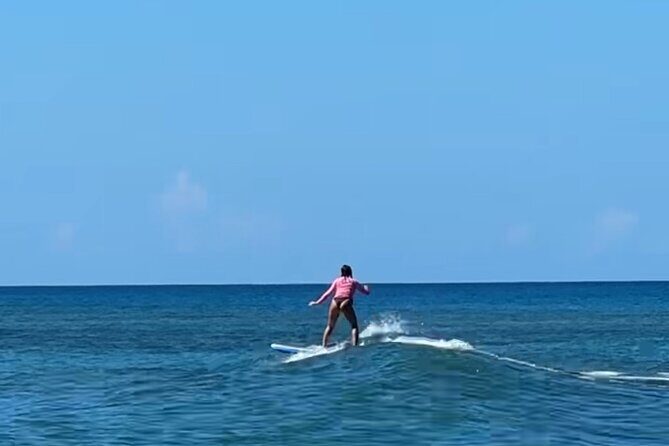
The fastest route to improvement is simple: listen on land, then commit when you’re in the water.
A few practical tips that fit the way these lessons run:
- Pay attention during the sand portion, even if you feel impatient. That timing is when your balance and body position get set.
- Don’t fight every wave. Learn when to wait and when to try. That’s part of the skill.
- Treat the first few attempts as training reps. Many first-timers start seeing progress after 30–45 minutes once the basics click.
- Stay relaxed. When you tense up, you lose paddling efficiency and balance.
You’ll also get the best experience if you’re ready to laugh at wipeouts. Surfing is humbling in a fun way. And when the coaching is good, those mistakes turn into quick adjustments.
Should You Book This San Juan Surf Lesson?
Book it if you want:
- A real surf experience in 2 hours, not a slow introduction with minimal time in the water
- Coaching from Red Cross-certified lifeguards who actively guide you
- A setup that includes the surf board, so you travel lighter
- A flexible, learn-by-doing format with one hour taught and one hour for yourself
Skip it or adjust expectations if:
- You’re hoping for a guaranteed easy, gentle surf day. Weather can change the conditions.
- You’re very picky about foam board feel or sizing, since at least one earlier experience included foam boards with limited options.
If you’re in Isla Verde for a few days and want an activity that’s hands-on, memorable, and actually teaches you something, this is one of the more direct ways to do it.
FAQ
What’s the duration of the San Juan surfing lesson?
It runs for about 2 hours.
How much does it cost?
The price is $85.00 per person.
What’s included in the price?
A surf board is included.
Where do we meet, and where does it end?
You meet at Courtyard by Marriott Isla Verde Beach Resort (7012 C. Avenue Boca de Cangrejos, Carolina, 00979, Puerto Rico) and the activity ends back at the meeting point.
Do instructors teach beginners?
Yes. The instructors tailor the lesson to your skill level and help you select the proper surf board.
How is the lesson structured?
You start with fundamental techniques on the sand, then move into the water. About one hour is spent with the instructor, followed by an additional hour to surf independently.
Are the instructors certified?
Yes. Instructors are certified life guards (Red Cross).
Is this experience private?
Yes. It’s private, and only your group will participate.
What happens if weather affects surfing conditions?
Surfing conditions depend on weather patterns and the experience requires good weather. If it’s canceled due to poor weather, you’ll be offered a different date or a full refund.