REVIEW · SAN JUAN
Old San Juan Tour in Spanish
Book on Viator →Operated by Daniel Rivera Viruet · Bookable on Viator
A Spanish-only walk through Old San Juan. This 2-hour experience is built for people who want the city’s history and legends in Spanish, led by Daniel Rivera Viruet, and it keeps things human-sized with a maximum of 20. I also like that you get inside a couple of churches only when it’s quiet, so the mood stays respectful and you do not feel rushed. One thing to plan for: you will be on cobblestones and there is no entry into the big castles during the walk.
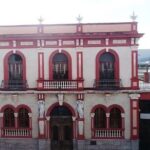
Old San Juan is a walled, defended city with stories you can still feel in the streets. You start at Plaza Colón and you hear why Spain built a fortified city in the 1500s, then you move through forts, gates, chapels, and viewpoints that connect architecture to real people and real conflict. I like the way the guide shapes it into a smooth walk with frequent photo stops and short explanations that actually help you notice what you are looking at.
The tour is also picky in a good way. You do not go inside Castillo San Cristóbal or Castillo San Felipe del Morro, and you do not enter the house of Juan Ponce de León. You can visit those later with separate entrance tickets, which is a trade-off: less time inside museums during the tour, but more time seeing the full layout of the city on foot.
In This Review
- Key points before you go
- $30 and the real value of a Spanish-only Old San Juan tour
- Plaza Colón: starting at the walled city’s heart
- Parroquia San Francisco de Asís and the “quiet entry” rule
- San Cristóbal and El Morro: why the best view is sometimes outside
- Calle San Sebastián and the festival connection in January
- La Puerta de la Bandera: the flag story you can photograph
- La Rogativa viewpoint: bay air and the Juan Ponce de León connection
- Cuartel de Ballaja and the practical bathroom moment
- The cemetery, Plaza del Quinto Centenario, and Jaime Suárez’s totem
- Door of San Juan Bautista and Calle de la Fortaleza: gates and daily life
- Capilla del Santo Cristo de la Salud: the tour’s end and your lunch plan
- Pacing, cobblestones, and how to get comfortable in 2 hours
- Should you book the Old San Juan Tour in Spanish?
- FAQ
- Is this tour offered only in Spanish?
- How long is the tour?
- Do you enter the castles during the tour?
- Do you go inside the churches?
- Is there a bathroom stop?
- Is this tour suitable for people who need mobility support?
Key points before you go
- Spanish at 12:30 pm: this is the option offered only in Spanish, unlike the usual English timing
- Daniel Rivera Viruet’s guiding style: calm, attentive, and willing to pause for questions
- Church entrances are respectful: you only enter when it is empty or only a few people are there
- Castles stay outside on the tour: you get the views and context, with separate tickets if you want to go in
- Smart city-stop mix: gates, streets, plazas, a flag photo spot, and a bay viewpoint
- Small group pace: short stops that add up to about two hours without feeling like a sprint
$30 and the real value of a Spanish-only Old San Juan tour
At $30 per person for about two hours, this is the kind of tour that works because it targets what you actually want in Old San Juan: orientation plus context. You are not paying for a long bus ride or a big “show.” You are paying for a guided walk through the thick of the historic core, with a guide who can explain what you are seeing in Spanish at the 12:30 pm start time.
Language matters here. Old San Juan is touristy, yes, but a Spanish-only guide changes the whole feel. You are picking up place names, stories, and cultural cues the way locals would hear them. The tour also notes that English tours may be available at a different time, so if you want Spanish specifically, you are choosing the version that fits.
The one cost to budget for is that some major sites are not entered during the walk. The castles and Juan Ponce de León’s house have entrance fees if you want to go inside later. Still, the tour can be a great way to decide whether those paid stops are worth your time after you understand where they sit.
You can also read our reviews of more tours and experiences in San Juan.

Plaza Colón: starting at the walled city’s heart
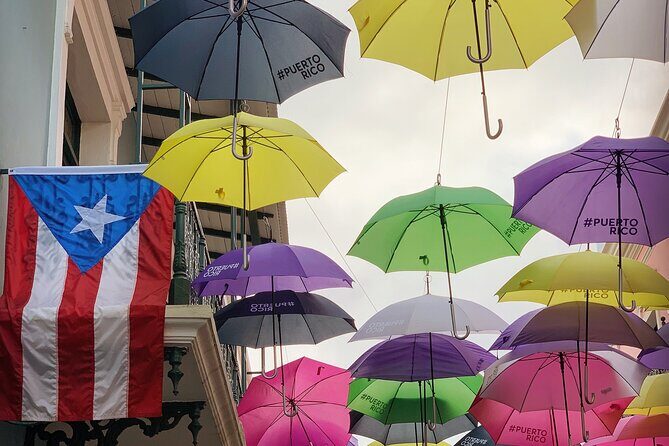
You meet at 407 C. de San Francisco in Old San Juan, and you begin near Plaza Colón. This is a smart opening point because it is central, easy to understand, and close to the streets that define the historic layout.
From the start, the guide sets the big picture: Old San Juan grew into an important, protected city, defended against pirates and privateers, with walls built to hold back trouble. You also get the explanation behind why Spain built a walled city in the 1500s. That detail is useful because once you know the logic of the walls, everything else makes more sense: the positioning of streets, the placement of gates, and why the fortifications matter.
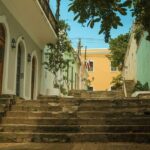
It is also a good moment for practical settling in. You get a quick intro, then you start walking cobblestone streets with colorful buildings around you.
Parroquia San Francisco de Asís and the “quiet entry” rule
Religious buildings in Old San Juan can be crowded. This tour handles that reality with a simple rule: you only enter if it is empty or only a few people are there. And if people are praying, you do not interrupt.
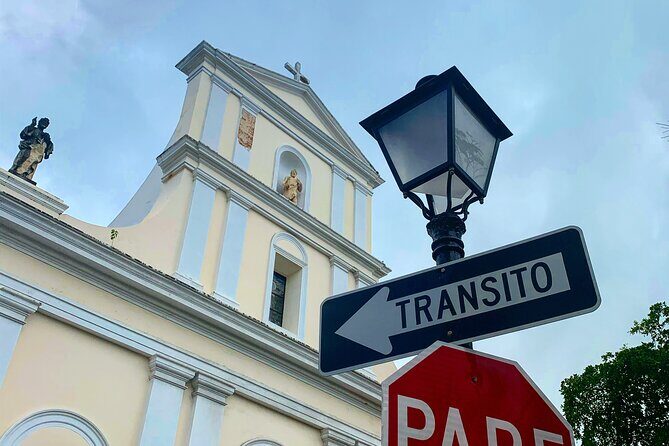
You stop at Parroquia San Francisco de Asís, a church founded in 1756, and you learn about its history and details. That quiet-entry approach is one reason the tour feels respectful. It also helps you actually see what is inside instead of standing at the threshold with everyone else craning for a look.
Later, you also get another church visit with the same style: Iglesia de San Jose (second oldest church in Puerto Rico, dated 1532) and another church described as the oldest in Puerto Rico (1521). With this kind of guidance, you are not just ticking off buildings. You are learning why they matter and what to pay attention to when you walk in.
A small drawback: because entries depend on crowd levels, you might not always get a long time inside every church. But that is the trade-off for a calmer, less disruptive experience.
San Cristóbal and El Morro: why the best view is sometimes outside
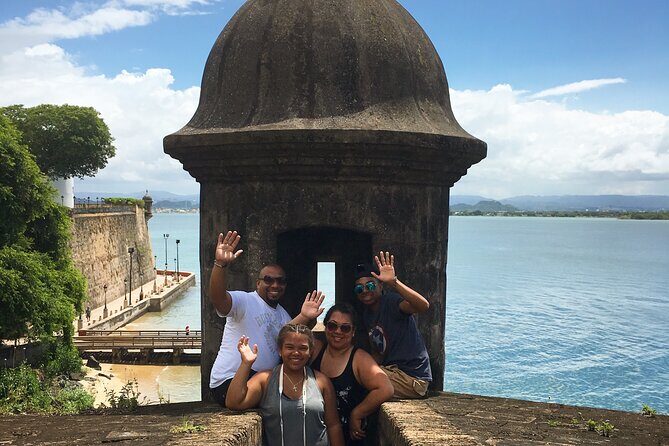
Two of the biggest names in Puerto Rico’s defensive architecture show up as outside views on this walk.
First is Castillo de San Cristóbal, described as the largest castle built in America to defend the city. Then comes Castillo San Felipe del Morro, built in 1539 to defend the entrance to the bay. In both cases, you do not enter during the tour.
I actually like this approach, especially for a first-time visitor. When you stay outside, you see the city’s relationship to the fortifications: where the bay sits, how the defenses line up, and how the walls and gates guide movement. You are learning the map of power, not just collecting castle interior photos.
The tour also makes it clear that you can visit both castles after finishing the walk. That way, you are not paying for a timed interior tour you may not even want. If you finish the walk feeling curious, you can choose to spend extra money and time going inside. If you are history-castle’d out, you are still satisfied with what you got on foot.
Calle San Sebastián and the festival connection in January
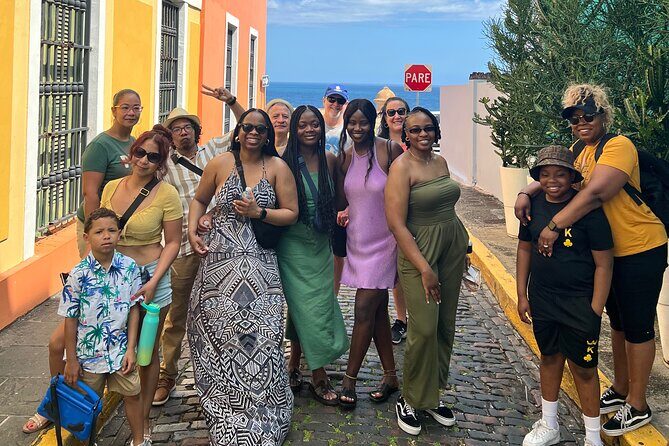
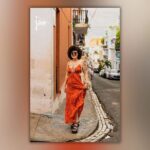
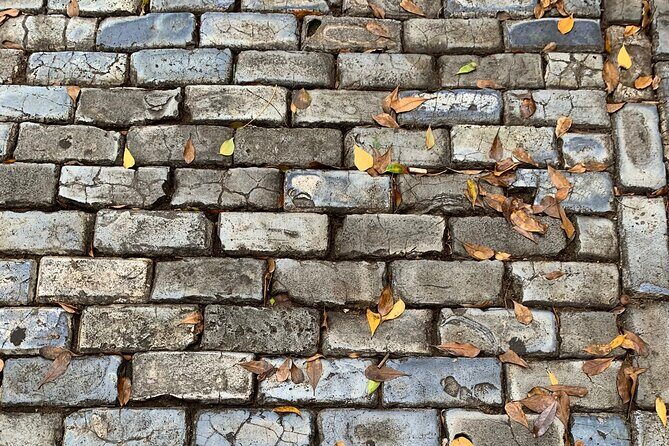
After the castles, you get a street-level experience on Calle San Sebastián. It is one of those Old San Juan streets that looks like a postcard, with cobblestones and colorful buildings. But the tour adds a practical detail: this is where Puerto Rico’s largest festival is celebrated in January.
That matters because it changes how you think about the street. It is not just scenery. It is part of a calendar of local life. Even if you are not there in January, you start to imagine how the city transforms—how people fill the spaces, how music and celebrations flow through the same route you are walking today.
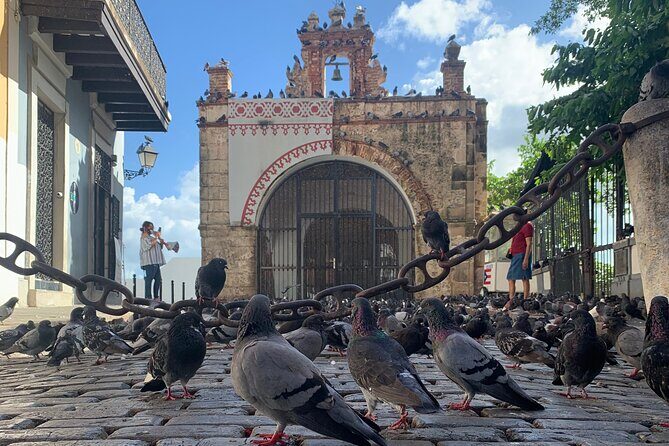
La Puerta de la Bandera: the flag story you can photograph
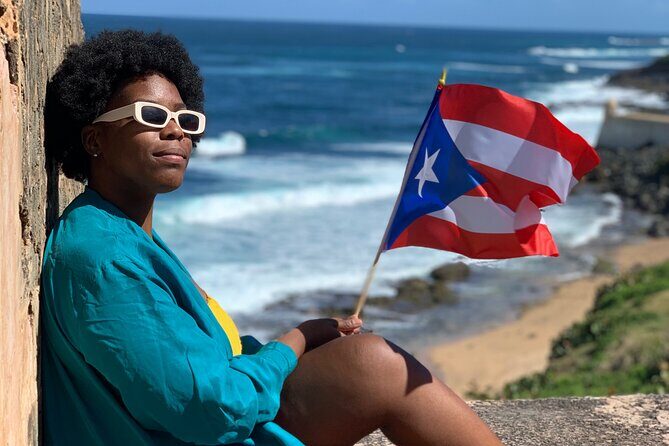
You also visit La Puerta de la Bandera, where you learn about the flag of Puerto Rico and how it has changed over time. There is also a built-in photo moment here. Flags and gates are a natural pairing: symbols and architecture together.
The value of this stop is that you leave with more than a pretty location. You connect political identity to place. Old San Juan is full of surviving structures from different eras, and this kind of context helps you read what you are seeing instead of treating everything like background scenery.
La Rogativa viewpoint: bay air and the Juan Ponce de León connection
Next comes La Rogativa, a bay-facing walk where the city opens up visually. From here, you can see part of Juan Ponce de León’s house.
You might not enter the house during the tour, but you get the important piece: location. You are learning where it sits in relation to the bay and defenses, which is exactly what helps when you later choose to visit the house on your own.
Then you move along, still in the thick of the historic core, with explanations that tie architecture and daily life together—at least enough to make your future self say, Yes, now I get it.
Cuartel de Ballaja and the practical bathroom moment

You stop at Cuartel de Ballaja, the place where Spanish soldiers lived. The tour explains the history of the site, and you get a note that it is a bathroom stop if available.
That is not glamorous, but it is useful. A two-hour Old San Juan walk can feel longer if you do not plan for real-life needs. So if you see the chance to use the facilities there, take it. It is right in the flow of the tour and easier than trying to hunt later.
The cemetery, Plaza del Quinto Centenario, and Jaime Suárez’s totem
A quieter stop follows: an old cemetery located on the edge of the beach and near Castillo del Morro. That location is part of the meaning. You are walking through a city where even the resting places connect to the coast and the fortifications.
Then comes Plaza del Quinto Centenario, built in 1992 to celebrate the 500 years of the discovery of America. The tour points out details the plaza hides, including the Telluric Totem by artist Jaime Suárez.
Why this matters: plazas like this often get passed quickly because they look modern compared with the forts and chapels. But a guided explanation helps you see them as part of the city’s ongoing story, not just a background square.
Door of San Juan Bautista and Calle de la Fortaleza: gates and daily life
You also learn about the Door of San Juan Bautista, one of the main gates of the walled city. Gates are big deal structures. They controlled movement. They shaped who could get in, what routes people used, and how defenses worked in real life.
Finally, you head onto Calle de la Fortaleza, described as the main street of Old San Juan. This is where you find shops, restaurants, crafts, and galleries. The tour uses it as a practical transition: you stop long enough to understand the history angle, then you leave the door open for you to explore on your own.
This is where you can turn what you learned into choices: pop into a small shop, grab a snack, or keep walking for photos without feeling like you missed something crucial.
Capilla del Santo Cristo de la Salud: the tour’s end and your lunch plan
The tour finishes at Capilla del Santo Cristo de la Salud. From here, you can continue walking along Fortaleza Street for lunch or more browsing.
If you want a smooth afternoon, plan for lunch right after the walk. You will already be oriented by the time you get to Fortaleza Street, so you can spend your time eating instead of wandering in circles.
Pacing, cobblestones, and how to get comfortable in 2 hours
This is a walking tour. The experience lists a moderate physical fitness level requirement, and the route is built on cobblestones. That means:
- wear shoes that work on uneven stone
- bring sunscreen and water, especially at midday
- keep expectations realistic about indoor time
Also, note that the guide may enter churches only when they are empty or lightly occupied. So you should treat church visits as short and focused rather than a long museum-style stop.
The tour’s size helps here. With a maximum of 20 travelers, it is easier for the guide to keep everyone together and answer questions without long delays.
Should you book the Old San Juan Tour in Spanish?
Yes, if you want Old San Juan explained in Spanish and you care more about understanding the place than ticking off everything inside expensive sites. This tour is strong for first-timers who want to get the city’s defensive logic, street names, and landmark meanings in a way that feels personal.
Skip it (or pair it with other plans) if you specifically want long interior time in major fortresses, because Castillo San Cristóbal and El Morro are viewed from outside on this walk. You can still visit them later, but they will not be part of the tour’s included time.
If your goal is a calm, respectful walk through the historic core—with stops that explain what you are looking at—this one is a good match.
FAQ
Is this tour offered only in Spanish?
Yes. This specific Old San Juan walking tour is the version offered only in Spanish. English availability may depend on availability if you message before booking.
How long is the tour?
The tour lasts about 2 hours.
Do you enter the castles during the tour?
No. The tour states that it does not enter Castillo de San Cristóbal or Castillo San Felipe del Morro. You can visit those castles after the tour with separate entrance tickets.
Do you go inside the churches?
You may enter some churches only if they are empty or have only a few people. The tour also notes that you cannot interrupt people who are praying.
Is there a bathroom stop?
There is a bathroom stop possibility at Cuartel de Ballaja, if available.
Is this tour suitable for people who need mobility support?
It requires a moderate physical fitness level because you will be walking. It also allows service animals and is near public transportation.